When someone says “See you tomorrow, Inshallah,” what do they really mean? Is it just a cultural habit? A polite phrase? Or something much deeper?
If you’ve ever wondered about the true inshallah meaning, you’re not alone. This simple Arabic phrase carries profound spiritual weight. It’s not just about the future — it’s about faith, surrender, hope, and trust in Allah’s divine plan.
Let’s explore the beauty behind this powerful expression and understand why it holds such importance in Islam and daily Muslim life.
What Does Inshallah Mean?
At its core, the inshallah meaning is simple yet profound.
Literal Translation of Inshallah
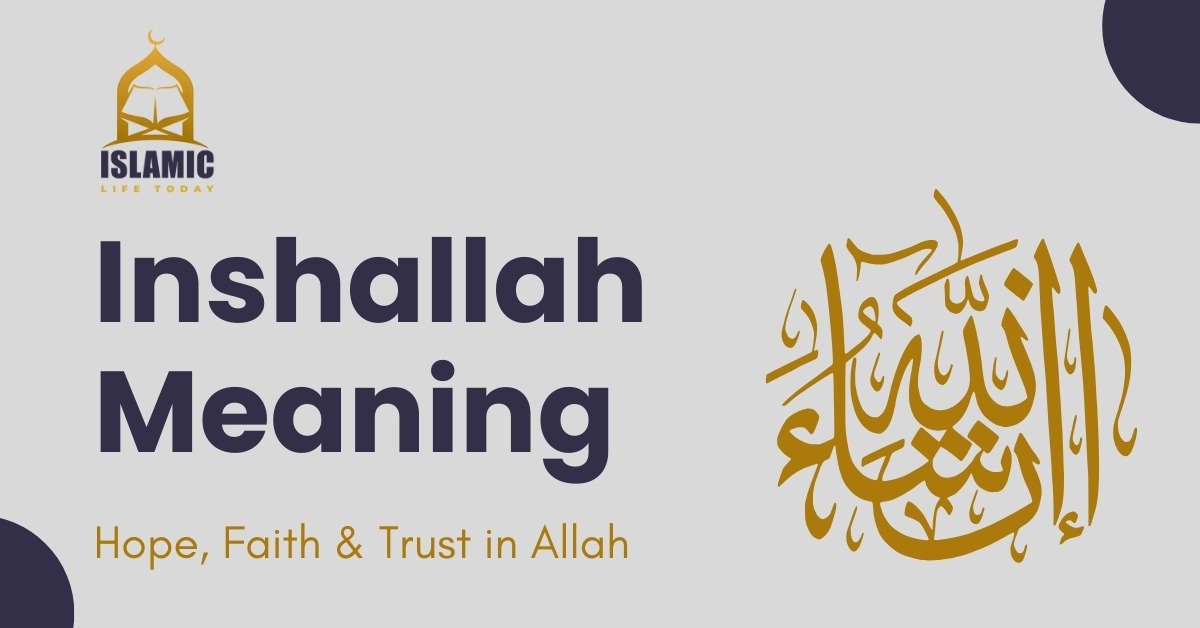
“Inshallah” (إن شاء الله) translates to:
“If Allah wills” or “God willing.”
It is said when speaking about something that will happen in the future. Whether it’s a small plan like meeting a friend or a major goal like starting a business, Muslims say Inshallah to acknowledge that nothing happens without Allah’s permission.
The Arabic Roots of the Word
The phrase is made of three words:
- In – If
- Sha’a – Wills
- Allah – God
Put together, it forms a complete statement of belief: Nothing happens unless Allah wills it.
Isn’t that powerful? Just three words — yet they reshape how you look at life.
Inshallah Meaning in the Light of the Quran
The concept of saying Inshallah is not just cultural — it’s Quranic.
In the Holy Quran, Allah instructs believers not to say they will do something tomorrow without adding Inshallah. This reminder teaches humility and recognition of divine control.
Context and Lesson from the Verse
The lesson is clear: humans plan, but Allah decides.
Think about it. How many times have we planned something perfectly — and it still didn’t happen? That’s life. And that’s exactly where the inshallah meaning becomes deeply relevant.
It protects us from arrogance. It reminds us we are dependent on Allah.
Why Do Muslims Say Inshallah So Often?
If you spend time in a Muslim community, you’ll hear Inshallah everywhere. But why?
Expression of Hope
Saying Inshallah is like planting a seed of hope. It’s optimistic. It reflects belief that Allah’s will is good, even if we don’t understand it immediately.
Submission to Allah’s Will
Islam literally means submission. When you say Inshallah, you are submitting your plans to Allah’s wisdom.
It’s like saying, “I will try my best — and I trust you with the outcome.”
Reminder of Human Limitation
We control effort, not results. Saying Inshallah humbles the ego. It reminds us that we are not in ultimate control — and that’s actually comforting.
The Spiritual Power Behind Inshallah Meaning
The deeper you reflect on the inshallah meaning, the more spiritual strength you gain.
Building Tawakkul (Trust in Allah)
Tawakkul means complete reliance on Allah. Inshallah nurtures this mindset daily.
Imagine life as a ship. Your effort is the steering wheel. But Allah controls the ocean, the wind, and the destination.
Wouldn’t you feel calmer knowing the ocean is controlled by the Most Merciful?
Strengthening Faith During Uncertainty
Life is uncertain. Jobs change. Health fluctuates. Relationships evolve.
Saying Inshallah transforms uncertainty into faith. Instead of fear, you feel trust.
Inshallah in Difficult Times
When facing hardship, saying Inshallah becomes a source of resilience.
- “I will recover soon, Inshallah.”
- “Things will improve, Inshallah.”
It shifts your mindset from despair to hope.
Inshallah Meaning in Daily Life
Let’s make it practical.
How does the inshallah meaning influence daily living?
Personal Goals and Plans
Planning to lose weight? Start a course? Improve your prayers?
Say Inshallah — not lazily, but consciously. Pair it with action.
Remember: Islam teaches effort + trust.
Business and Career
Entrepreneurs often face uncertainty. Deals fall through. Markets shift.
Saying Inshallah acknowledges risk — but also divine support.
It prevents overconfidence and reduces anxiety.
Family and Relationships
Parents say, “You’ll succeed, Inshallah.”
It’s more than encouragement. It’s a dua wrapped in a sentence.
Common Misunderstandings About Inshallah
Let’s address the elephant in the room.
Is It an Excuse?
Sometimes people misuse Inshallah to avoid commitment. They say it casually when they don’t intend to follow through.
But that’s cultural misuse — not true Islamic understanding.
The real inshallah meaning includes sincerity and intention.
Cultural vs. Religious Usage
In some cultures, Inshallah may sound like “maybe” or “probably not.”
But Islamically, it means sincere hope tied with trust in Allah.
Difference Between Inshallah, Mashallah & Alhamdulillah
These phrases are often confused.
Inshallah Meaning
Used for the future — If Allah wills.
Mashallah Meaning
Said when appreciating something — What Allah has willed.
Alhamdulillah Meaning
Used to express gratitude — All praise is for Allah.
Each phrase reflects a different relationship with time: future, present admiration, and gratitude.
The Psychological Benefits of Saying Inshallah
Here’s something fascinating — the inshallah meaning also has psychological benefits.
Reduces Anxiety
When you release control over outcomes, your stress decreases.
You focus on effort — not obsession.
Encourages Patience
Trusting Allah’s will teaches patience. And patience builds emotional strength.
It’s like knowing the author of your story writes with wisdom — even when the chapter seems confusing.
When Should You Say Inshallah?
Whenever you talk about the future, it is recommended to say Inshallah as a reminder that everything ultimately depends on Allah’s will. Whether it’s something simple like, “I’ll call you tomorrow, Inshallah,” or a bigger life plan, this phrase keeps your heart connected to faith. The true inshallah meaning isn’t about uncertainty—it’s about humility and trust.
And when you’re making a promise, saying Inshallah should come from a place of sincerity. It means you genuinely intend to fulfill what you’ve said, while recognizing that Allah is in control of the outcome. It’s not a passive statement or an escape clause. It’s powerful because it combines commitment with complete reliance on Allah.
The Beauty of Inshallah Meaning in Modern Life
In today’s fast-paced world, everyone wants control.
But control is an illusion.
The inshallah meaning reminds us that life isn’t random chaos — it’s divinely managed.
It guards against arrogance in success, brings comfort in failure, fosters humility in ambition, and creates balance amid uncertainty.
Isn’t that exactly what modern life needs?
Frequently Asked Questions (FAQs)
It means “If Allah wills” or “God willing,” referring to future events dependent on Allah’s permission.
It is highly recommended when speaking about future plans, as taught in the Quran.
Yes, anyone can use the phrase. It simply expresses belief in divine will.
Culturally it may be misused, but in Islam it reflects sincere intention and trust in Allah.
Inshallah refers to the future (if Allah wills), while Mashallah refers to admiration of something Allah has already willed.
Conclusion
The true inshallah meaning is far more than “God willing.” It is a declaration of faith, a shield against arrogance, a cure for anxiety, and a reminder of divine wisdom.
It teaches us that while we plan, Allah plans better.
So the next time you say Inshallah, pause for a second. Feel its depth. Mean it. Trust it.
Because behind those three simple words lies hope, faith, and complete trust in Allah.
And honestly, what could be more powerful than that?