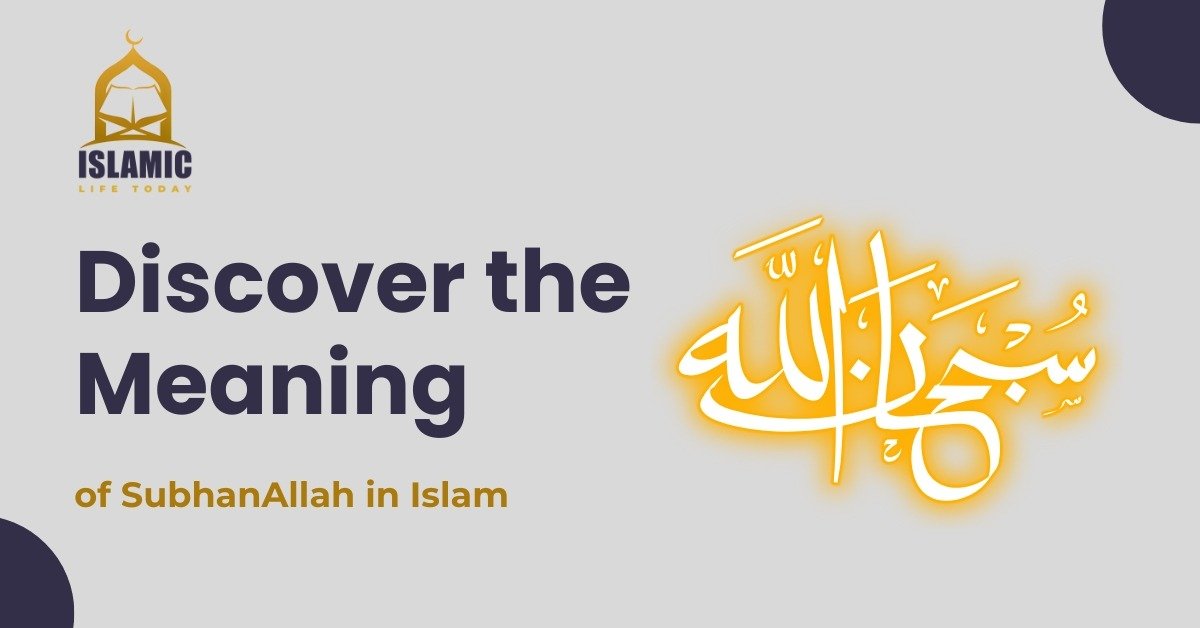
Have you ever paused and wondered what you’re truly saying when you utter SubhanAllah? It’s one of the most commonly repeated phrases in Islam, yet many people say it without fully grasping its depth.
The meaning of SubhanAllah goes far beyond a simple translation. It carries a powerful message about how Muslims view Allah—pure, perfect, and free from any flaw.
Why This Phrase Matters in Daily Life
Think of SubhanAllah like a spiritual reset button. In fact, every time you say it, you’re gently reminding yourself that Allah is far beyond human limitations. As a result, that powerful reminder brings calm, clarity, and a renewed sense of perspective. Over time, it helps you slow down, reflect deeper, and reconnect with what truly matters.
The Spiritual Power Behind Simple Words
Sometimes, the smallest phrases carry the biggest meanings. SubhanAllah is one of those gems—short, simple, yet incredibly profound.
What Does “SubhanAllah” Mean Literally?
It literally means “Allah is free from all imperfections,” expressing His absolute purity and perfection.
Linguistic Roots of SubhanAllah
The word SubhanAllah comes from the Arabic root “س ب ح (S-B-H),” which relates to distancing or declaring something free from imperfection.
Translation vs True Meaning
While it’s often translated as “Glory be to Allah”, the real meaning is deeper:
“Allah is free from any نقص (deficiency), flaw, or imperfection.”
It’s not just praise—it’s a declaration of divine perfection.
The Deeper Meaning of SubhanAllah in Islam
It signifies acknowledging Allah’s complete perfection and declaring Him free from any flaw, while deepening your spiritual connection and mindfulness.
Declaring Allah’s Perfection
When you say SubhanAllah, you’re essentially saying:
“Allah is perfect in every way.”
Flawless execution, unmatched strength, and limitless potential.
Removing Imperfections from Allah
It’s also a form of negation. You’re denying any false attributes that people might associate with Allah.
It’s like saying:
“Anything imperfect? That’s not Allah.”
When Do Muslims Say SubhanAllah?
Muslims say SubhanAllah to glorify Allah whenever they witness something amazing, experience awe, or want to remember His perfection—whether during daily life, in prayer, or while practicing dhikr.
In Daily Conversations
You’ll often hear Muslims say SubhanAllah when they see something amazing:
- A beautiful sunset
- A newborn baby
- Nature’s wonders
It’s their way of acknowledging the Creator behind the creation.
During Prayer and Worship
SubhanAllah is also a key part of daily worship:
- In Salah (prayer)
- After prayer (33 times)
- During dhikr (remembrance of Allah)
SubhanAllah in the Quran and Hadith
سُبْحَانَ ٱللَّٰهِ in the Quran and Hadith highlights the importance of glorifying Allah’s perfection, with frequent mentions in the Quran and strong encouragement from Prophet Muhammad (PBUH) to recite it regularly as a form of worship and remembrance.
Quranic References
The Quran frequently emphasizes glorifying Allah. Phrases like:
“Glorify the name of your Lord, the Most High”
highlight the importance of declaring Allah’s perfection.
Teachings from Prophet Muhammad (PBUH)
The Prophet (PBUH) encouraged frequent dhikr. One famous teaching mentions:
Saying SubhanAllah, Alhamdulillah, and Allahu Akbar regularly brings immense rewards.
Benefits of Saying SubhanAllah
Benefits of Saying SubhanAllah include strengthening your faith, bringing inner peace, increasing mindfulness, and earning immense spiritual rewards, while also providing emotional calm and a positive perspective on life.
Spiritual Benefits
- Strengthens your connection with Allah
- Increases your ایمان (faith)
- Brings you closer to Jannah
Psychological and Emotional Benefits
Let’s be real—life gets stressful.
Saying SubhanAllah:
- Calms your mind
- Reduces anxiety
- Shifts your focus to positivity
It’s like a spiritual therapy session… without the bill.
Difference Between SubhanAllah, Alhamdulillah, and Allahu Akbar
It explains how SubhanAllah praises Allah’s perfection, while Alhamdulillah expresses gratitude, and Allahu Akbar acknowledges His greatness. Together, each serves a unique purpose in worship and daily life.
Understanding Each Phrase
- SubhanAllah → Allah is perfect
- Alhamdulillah → All praise is for Allah
- Allahu Akbar → Allah is the greatest
When to Use Each One
- See something amazing? → SubhanAllah
- Feel grateful? → Alhamdulillah
- Feel overwhelmed? → Allahu Akbar
How to Incorporate SubhanAllah in Daily Life
You can incorporate SubhanAllah in daily life by making it a habit during prayers, repeating it while noticing beauty or blessings around you, and including it in your daily dhikr routine for constant remembrance of Allah.
Simple Habits to Build
Start small:
- Say it after every prayer
- Repeat it while walking or driving
- Use it when you notice beauty
Dhikr Routine for Beginners
Try this simple routine:
- SubhanAllah (33 times)
- Alhamdulillah (33 times)
- Allahu Akbar (34 times)
Just 2–3 minutes… but massive rewards.
Common Misconceptions About SubhanAllah
Common Misconceptions About SubhanAllah include saying it mechanically without understanding its meaning or using it casually as a phrase, when in reality it is a profound act of worship that requires awareness and intention.
Saying It Without Understanding
Many people repeat SubhanAllah mechanically. But without understanding, the impact is limited.
Think of it like reading without comprehension—you miss the essence.
Cultural vs Religious Usage
Sometimes people use it casually, without intention. But in Islam, it’s an act of worship.
Intent matters.
The Impact of SubhanAllah on Faith (Iman)
The impact of SubhanAllah on faith (Iman) lies in its power to strengthen your connection with Allah. Moreover, it increases mindfulness and deepens spiritual awareness. As a result, it ultimately helps believers live a more conscious and faith-filled life.
Strengthening Connection with Allah
The more you remember Allah, the stronger your relationship becomes.
SubhanAllah is like a bridge between you and your Creator.
Increasing Mindfulness
It makes you more aware:
- Of Allah’s presence
- Of your surroundings
- Of your purpose in life
Frequently Asked Questions (FAQs)
It means Allah is free from all imperfections and is perfectly pure.
Common practice is 33 times after each prayer, but you can say it anytime.
Absolutely! Understanding the meaning makes it even more powerful.
Yes, it is a form of dhikr and highly rewarded in Islam.
It strengthens your faith, brings peace to your heart, and earns spiritual rewards.
Conclusion
The meaning of SubhanAllah is simple on the surface but incredibly deep at heart. It’s not just a phrase—it’s a mindset, a belief, and a powerful form of worship.
When you truly understand it, you don’t just say SubhanAllah… you feel it.
So next time it rolls off your tongue, pause for a second—and let it sink in.
Because sometimes, the smallest words bring the biggest transformations.