Islam is not just a religion—it’s a way of life. At the very heart of this divine way of living lies Rukun Islam, the five foundational pillars that support a Muslim’s faith, actions, and purpose. Think of Rukun Islam like the roots of a strong tree. When the roots are deep and firm, the tree stands tall through every storm. Without them, everything above collapses.
For Muslims around the world, understanding and practicing rukun islam is not optional—it’s essential. Whether you are born into Islam, newly exploring the faith, or simply curious, this guide from islamiclifetoday.com will walk you through everything you need to know in a clear, engaging, and human way.
Introduction to Rukun Islam: The Backbone of Islamic Life
If someone asked, “What holds Islam together?” the simplest answer would be Rukun Islam. These five pillars define what it means to be Muslim at the most basic level. They are not complex theories or unreachable ideals. Instead, they are practical actions that connect belief with daily life.
From declaring faith to praying, fasting, giving charity, and performing pilgrimage, rukun islam shapes how Muslims worship Allah, treat others, and live with purpose. It’s faith in motion—not just words, but actions that touch every part of life.
What Does Rukun Islam Mean? A Simple Explanation
Rukun Islam means the five essential pillars of Islam that form the foundation of a Muslim’s belief, worship, and daily way of life.
Linguistic Meaning of Rukun
The Arabic word “Rukun” means pillar or support—something strong that holds a structure upright. Just like a building relies on its pillars to remain standing, Islam relies on these core practices to remain complete.
Religious Meaning in Islam
In Islamic teachings, rukun islam refers to the five obligatory acts that every Muslim must believe in and practice. They form the framework of worship and obedience to Allah.
Why Rukun Islam Is Central to Faith
Without these pillars, Islam would be incomplete in practice. Belief alone is not enough—Islam calls for action. Rukun Islam bridges the gap between what a Muslim believes in their heart and how they live in the real world.
Why Rukun Islam Is Important for Every Muslim
It is important because it provides every Muslim with a clear framework to strengthen faith, practice worship correctly, and live a disciplined, purpose-driven life according to Islam.
Rukun Islam as a Complete Way of Life
Rukun Islam is not limited to mosques or religious gatherings. It guides personal discipline, social responsibility, and spiritual growth. Each pillar addresses a different aspect of human life—belief, time, wealth, self-control, and unity.
Spiritual, Moral, and Social Impact
Practicing rukun islam builds:
- A strong connection with Allah
- Discipline and self-control
- Compassion for others
- A sense of global Muslim unity
It’s like a compass that keeps a believer aligned, no matter how confusing life becomes.
The Five Pillars of Islam Explained
The Five Pillars of Islam explain the core acts of faith and worship that define a Muslim’s beliefs, responsibilities, and connection with Allah in everyday life.
Overview of the Five Pillars
The five pillars of Islam are:
- Shahadah – Declaration of Faith
- Salah – Daily Prayers
- Zakat – Obligatory Charity
- Sawm – Fasting in Ramadan
- Hajj – Pilgrimage to Makkah
Each pillar is unique, yet deeply connected—together forming the essence of rukun islam.
First Rukun Islam: Shahadah (Declaration of Faith)
Shahadah, the first Rukun Islam, is the heartfelt declaration of faith affirming the oneness of Allah and the prophethood of Muhammad ﷺ.
Meaning of Shahadah
Shahadah means declaring:
“There is no god but Allah, and Muhammad ﷺ is the Messenger of Allah.”
These simple words carry profound meaning. They affirm belief in the oneness of Allah and acceptance of Prophet Muhammad ﷺ as His final messenger.
Importance of Shahadah in Daily Life
Shahadah is not just spoken once—it’s lived every day. It shapes decisions, morals, and priorities. Every prayer, every good deed, every moment of patience stems from this declaration.
Shahadah as the Doorway to Islam
Shahadah is the entry point into Islam. Without it, the other pillars have no foundation. It’s like switching on a light—the moment it’s declared sincerely, life takes on a new meaning.
Second Rukun Islam: Salah (Daily Prayers)
Salah, the second Rukun Islam, is the practice of performing five daily prayers to maintain a constant connection with Allah and strengthen spiritual discipline.
Why Salah Is the Pillar of Faith
Salah is the most visible sign of Islam in a Muslim’s life. Prayed five times a day, it’s a constant reminder that life revolves around Allah—not the other way around.
Five Daily Prayers Explained
The daily prayers include:
- Fajr – before sunrise
- Dhuhr – midday
- Asr – afternoon
- Maghrib – after sunset
- Isha – night
Each prayer is a pause button—a chance to reconnect.
Spiritual Benefits of Salah
Salah cleanses the heart, calms the mind, and strengthens faith. It’s like charging your phone multiple times a day—without it, spiritual energy runs low.
Third Rukun Islam: Zakat (Obligatory Charity)
Zakat, the third Rukun Islam, is the obligatory act of giving a portion of one’s wealth to help the needy, purifying both wealth and heart.
Meaning and Purpose of Zakat
Zakat literally means purification. By giving a small portion of wealth (usually 2.5%), Muslims purify their earnings and hearts from greed.
Who Must Pay Zakat and Who Receives It
Zakat is obligatory on those who meet a minimum wealth threshold and is given to:
- The poor
- The needy
- Those in debt
- Other eligible categories defined in Islam
Social Justice Through Zakat
Zakat reduces inequality and strengthens communities. It turns wealth into a tool for mercy rather than power—a core goal of rukun islam.
Fourth Rukun Islam: Sawm (Fasting in Ramadan)
Sawm, the fourth Rukun Islam, is fasting during Ramadan to cultivate self-discipline, spiritual growth, and empathy for the less fortunate.
Purpose of Fasting in Islam
Fasting during Ramadan is about much more than food. It’s a spiritual detox—training the soul to resist desires and focus on Allah.
Physical and Spiritual Benefits
Fasting teaches patience, gratitude, and empathy for the hungry. It’s like pressing the reset button on the soul.
Ramadan as a Training Ground for the Soul
Ramadan transforms daily habits into acts of worship. Every fast becomes a reminder that self-control leads to freedom.
Fifth Rukun Islam: Hajj (Pilgrimage to Makkah)
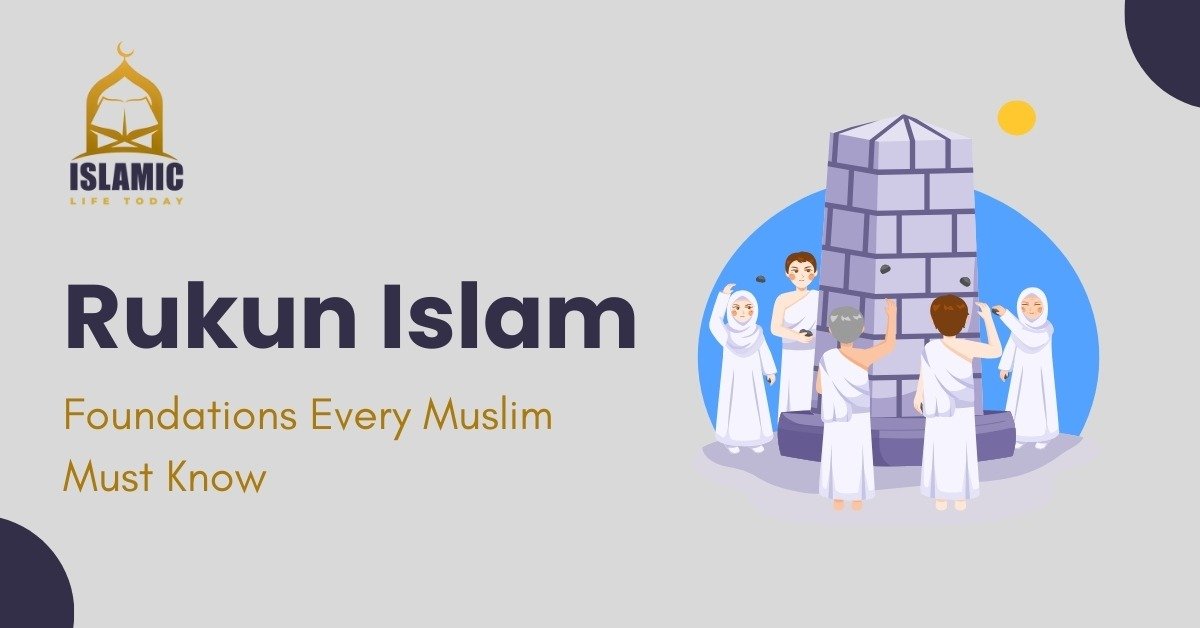
Hajj, the fifth Rukun Islam, is the once-in-a-lifetime pilgrimage to Makkah that unites Muslims in worship, humility, and equality before Allah.
Meaning and Obligation of Hajj
Hajj is a once-in-a-lifetime obligation for Muslims who are physically and financially able. Millions gather in Makkah, dressed the same, worshipping the same Lord.
Spiritual Lessons from Hajj
Hajj teaches humility, patience, and unity. Status, wealth, and nationality disappear—only faith remains.
Unity and Equality in Hajj
Hajj is a living example of global brotherhood. It reminds Muslims that before Allah, everyone stands equal.
How Rukun Islam Shapes a Muslim’s Daily Life
Rukun Islam shapes a Muslim’s daily life by guiding actions, decisions, and habits, ensuring faith is reflected in every thought and deed.
Practical Examples in Modern Life
From scheduling work around prayers to budgeting for zakat, rukun islam influences daily decisions. It provides structure in a chaotic world—like a map guiding you home.
Common Misconceptions About Rukun Islam
Many people often confuse cultural habits with true Islamic obligations, leading to misunderstandings about what is required in the faith. Cultural practices, while sometimes meaningful, are not the same as religious duties prescribed by Islam. By understanding Rukun Islam, Muslims can clearly distinguish between what is an essential part of their faith and what is merely a tradition or local custom. This clarity helps ensure that their worship, actions, and daily practices align with the core teachings of Islam rather than being influenced solely by cultural norms.
Teaching Rukun Islam to Children and New Muslims
Teaching Rukun Islam can be simple and effective when approached with practical methods. Using stories, real-life examples, and incorporating daily practice helps make these essential pillars easy to understand and remember. This approach is especially helpful for children and new Muslims, as it turns abstract concepts into relatable, meaningful lessons. By connecting learning to everyday life, Muslims of all ages can grasp the importance of each pillar and gradually integrate them into their routines, making faith a natural and lived experience.
Rukun Islam in the Modern World
In today’s fast-paced, digital world, staying committed to faith can be challenging, but Rukun Islam remains timeless and unchanging. These five pillars act as a spiritual anchor, helping Muslims navigate daily distractions and pressures while keeping their connection with Allah strong. By practicing the pillars consistently—whether through prayer, charity, fasting, or other acts of worship—believers can maintain balance, focus, and purpose, ensuring that their faith continues to guide them, no matter how busy or chaotic life becomes.
Frequently Asked Questions (FAQs)
Rukun Islam refers to the five basic pillars of Islam that every Muslim must believe in and practice.
Because it forms the foundation of Islamic belief, worship, and daily living.
Belief is essential, but practicing rukun islam strengthens faith and fulfills Islamic obligations.
All five are equally important and interconnected.
By studying authentic Islamic sources, practicing daily, and learning step by step with guidance.
Conclusion:
At its core, rukun islam is about balance—between belief and action, worship and daily life, spirituality and responsibility. These five pillars are not burdens; they are blessings designed to elevate human life.When practiced sincerely, Rukun Islam transforms ordinary routines into acts of worship and gives life meaning beyond material success. At islamiclifetoday.com, we believe understanding these foundations is the first step toward a stronger, more peaceful Islamic life.