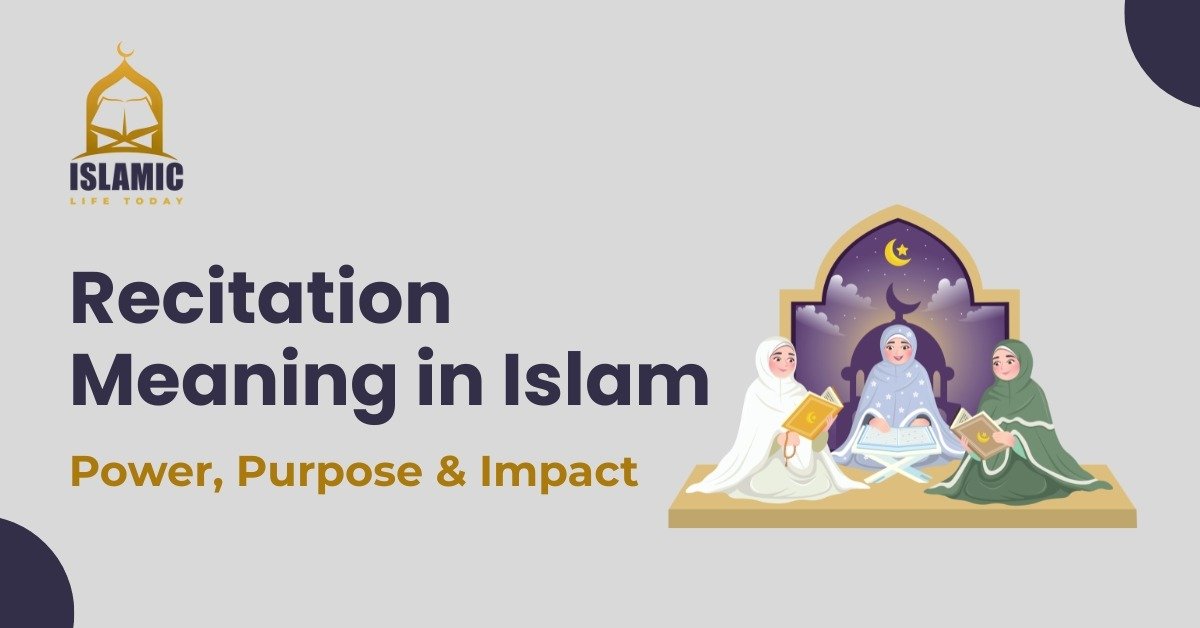
Have you ever wondered why recitation holds such a deep and emotional place in Islam? It’s not just about reading words—it’s something far more powerful, almost like a bridge between the human heart and the Divine.
What Does “Recitation” Truly Mean?
The term recitation meaning in Islam goes beyond simple reading. It refers to the rhythmic, melodious, and precise vocalization of the Quran. It’s not just about pronunciation—it’s about feeling every word, understanding its depth, and letting it resonate within you.
Think of it like listening to your favorite song. You don’t just hear it—you feel it. That’s exactly how Quranic recitation is meant to be experienced.
Why Recitation Holds a Special Place in Islam
Recitation is a form of worship. Every word you recite carries reward, and every verse has the potential to transform your inner state. It’s a direct interaction with Allah’s words—how powerful is that?
Understanding the Spiritual Essence of Recitation
It reflects the deep connection between the heart and the divine words, where recitation goes beyond sound and becomes a soulful spiritual experience.
Recitation vs Reading: What’s the Difference?
Reading is passive. Recitation, on the other hand, is active and engaging. When you recite, your tongue moves, your ears listen, and your heart absorbs.
It’s like the difference between reading a recipe and actually cooking the meal. One informs you—the other nourishes you.
The Role of Tajweed in Proper Recitation
It ensures every letter is pronounced correctly, preserving the beauty, accuracy, and true meaning of Quranic recitation.
Why Tajweed Matters
Tajweed refers to the rules governing Quranic pronunciation. It ensures that each letter is pronounced correctly, preserving the original message.
Without Tajweed, recitation can lose its beauty and even its meaning. It’s like mispronouncing lyrics in a song—it just doesn’t hit the same way.
The Quran and Its Unique Recitation Tradition
It highlights how the Quran is uniquely preserved and experienced through a powerful oral tradition of rhythmic and heartfelt recitation.
Why the Quran is Meant to Be Recited Aloud
The Quran was revealed orally and preserved through recitation. This oral tradition ensures its authenticity and allows believers to connect emotionally.
Reciting aloud engages your senses and deepens your understanding. It’s not just about seeing the words—it’s about hearing and feeling them.
The Emotional and Spiritual Connection
Ever felt goosebumps listening to a beautiful recitation? That’s not a coincidence. The rhythm and tone of Quranic recitation are designed to touch the soul.
The Power of Recitation in Daily Life
It shows how regular recitation brings inner peace, mental clarity, and strengthens faith in everyday life.
Inner Peace and Mental Clarity
Life gets overwhelming, right? Recitation acts like a reset button. It calms the mind and brings clarity.
Just a few minutes of recitation can feel like stepping into a peaceful sanctuary away from the chaos.
Strengthening Faith Through Recitation
Faith isn’t static—it grows. And recitation is one of the most effective ways to nurture it.
The more you recite, the stronger your connection with Allah becomes.
Purpose of Recitation in Islam
It reflects how recitation serves as an act of worship, deepening connection with Allah while offering guidance and spiritual reflection.
Worship and Connection with Allah
Recitation is not just an act—it’s a conversation. Through it, you connect with Allah on a deeply personal level.
Imagine receiving a letter from someone you love. Would you just skim through it? Or would you read it slowly, cherishing every word?
Guidance and Reflection
The Quran is a guide for life. Recitation helps you reflect on its meanings and apply them to your daily actions.
Impact of Recitation on the Heart and Soul
It reveals how recitation deeply touches the heart, bringing emotional healing, spiritual peace, and inner transformation.
Healing Through Quranic Recitation
Many people turn to recitation during difficult times—and for good reason. It has a soothing, healing effect on the heart.
It’s like medicine, but for the soul.
Transforming Character and Behavior
Consistent recitation shapes your personality. It instills patience, humility, and compassion.
Over time, you’ll notice subtle but powerful changes in how you think and act.
Benefits of Consistent Quran Recitation
It highlights how regular Quran recitation brings continuous spiritual rewards, strengthens discipline, and nurtures personal growth.
Spiritual Rewards and Blessings
Every letter recited brings reward. Imagine the endless blessings you accumulate with daily recitation.
It’s one of the simplest yet most rewarding acts of worship.
Personal Growth and Discipline
Recitation builds discipline. Setting aside time daily creates a routine that strengthens both your faith and your character.
Common Mistakes in Understanding Recitation Meaning
It points out frequent errors, like focusing only on melody or neglecting consistency, that can reduce the true impact of recitation.
Focusing Only on Sound Without Understanding
Many people focus on beautiful voice but forget the meaning. While melody is important, understanding is essential.
Balance is key.
Neglecting Consistency
Reciting once in a while won’t have the same impact as daily practice. Consistency is what brings transformation.
How to Improve Your Recitation Experience
It provides practical tips and strategies to enhance pronunciation, understanding, and the overall spiritual connection during recitation.
Practical Tips for Beginners
Start small. Even a few verses daily can make a difference. Focus on pronunciation and gradually improve.
Don’t rush—this is a journey, not a race.
Building a Daily Recitation Habit
Simple Routine That Works
- Choose a fixed time daily
- Start with short Surahs
- Listen to expert reciters
- Practice regularly
Consistency beats perfection every time.
Recitation Meaning in the Modern World
It explores how modern tools and technology make learning and teaching Quranic recitation easier, engaging, and accessible for everyone.
Digital Tools and Learning
Today, learning to recite is easier than ever. Apps, online classes, and videos provide access to expert guidance.
Use technology to your advantage—it’s a powerful tool for spiritual growth.
Teaching Recitation to the Next Generation
Children learn best through repetition and example. Teaching them recitation early builds a strong foundation.
Make it engaging, make it meaningful.
Frequently Asked Questions (FAQs)
It refers to the proper, rhythmic, and heartfelt reading of the Quran with understanding and correct pronunciation.
Recitation strengthens faith, provides guidance, and brings spiritual peace and rewards.
Not necessarily. While understanding enhances the experience, even listening or reciting brings spiritual benefits.
Practice daily, learn Tajweed, listen to skilled reciters, and seek guidance from teachers.
Daily recitation, even in small amounts, is highly recommended for consistency and spiritual growth.
Conclusion
Understanding the recitation meaning in Islam opens the door to a deeper spiritual experience. It’s not just about reading words—it’s about connecting with them, living them, and letting them transform you.
Whether you’re a beginner or someone looking to deepen your practice, remember this: every word you recite carries power, purpose, and impact. So why not make it a daily part of your life?