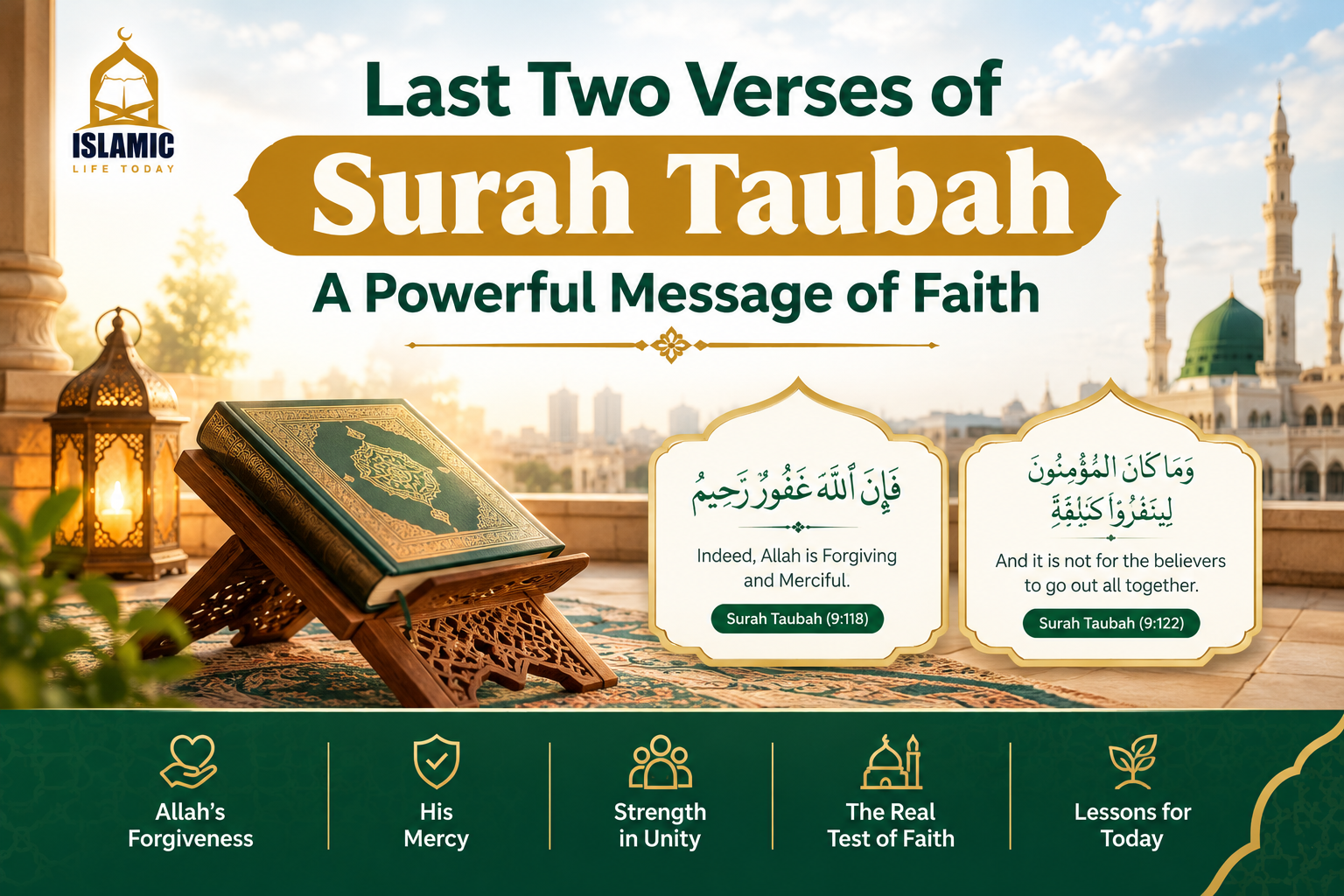
The Surah Tauba Last Two Verses, verses 128 and 129, contain a deeply moving message about the compassion of Prophet Muhammad ﷺ, the mercy of Allah, and the importance of trusting Allah in every situation. These final verses of Surah At-Tawbah remind believers that even when life feels overwhelming, Allah remains sufficient for the person who sincerely places their trust in Him.
For many Muslims, these verses are especially meaningful because they combine hope, faith, compassion, and tawakkul, or complete reliance upon Allah. They encourage us to look beyond our immediate difficulties and remember that our relationship with Allah is stronger than any problem we may face.
But what exactly do these two verses teach us? And how can their message become part of our everyday lives?
Let’s explore their meaning and lessons in a simple and thoughtful way.
What Are the Last Two Verses of Surah Taubah?
Surah At-Tawbah is the ninth chapter of the Quran and contains 129 verses. The final two verses are Surah At-Tawbah 9:128 and 9:129.
The first of these verses highlights the Prophet Muhammad’s ﷺ concern and compassion for the believers. The second directs believers toward Allah and teaches them to depend upon Him.
Together, they create a powerful ending to the Surah. The message moves from the Prophet’s ﷺ sincere concern for people to the believer’s ultimate source of strength: Allah.
It is almost like a reminder that human beings may care for one another deeply, but our greatest support and protection ultimately come from our Creator.
Surah Tauba Last Two Verses in Arabic
Surah At-Tawbah 9:128
لَقَدْ جَاءَكُمْ رَسُولٌ مِّنْ أَنفُسِكُمْ عَزِيزٌ عَلَيْهِ مَا عَنِتُّمْ حَرِيصٌ عَلَيْكُم بِالْمُؤْمِنِينَ رَءُوفٌ رَّحِيمٌ
This verse describes the Messenger of Allah ﷺ as someone deeply concerned about the difficulties experienced by his people and especially compassionate toward believers.
Surah At-Tawbah 9:129
فَإِن تَوَلَّوْا فَقُلْ حَسْبِيَ اللَّهُ لَا إِلَٰهَ إِلَّا هُوَ ۖ عَلَيْهِ تَوَكَّلْتُ ۖ وَهُوَ رَبُّ الْعَرْشِ الْعَظِيمِ
This final verse directs the believer toward Allah, emphasizing that He alone is worthy of worship and that true reliance should be placed upon Him.
Transliteration of the Last Two Verses
For readers who are learning Arabic or improving their Quran recitation, transliteration can provide additional support.
Surah At-Tawbah 9:128 Transliteration
Laqad jaa’akum rasoolun min anfusikum ‘azeezun ‘alayhi maa ‘anittum hareesun ‘alaykum bil-mu’mineena ra’oofur-raheem.
Surah At-Tawbah 9:129 Transliteration
Fa in tawallaw faqul hasbiyallaahu laa ilaaha illaa huwa ‘alayhi tawakkaltu wa huwa rabbul-‘arshil-‘azeem.
Transliteration can help beginners recognize the sounds of the Arabic words, but it should ideally be used alongside the original Arabic text and guidance from a qualified Quran teacher for accurate pronunciation.
English Translation of Surah Taubah 128-129
The meaning of verse 128 is that a Messenger has come from among the people, and their suffering is difficult for him to bear. He is deeply concerned for them and is compassionate and merciful toward the believers.
Verse 129 teaches that if people turn away, the believer should say that Allah is sufficient, that there is no deity worthy of worship except Him, and that reliance is placed upon Him. He is the Lord of the Mighty Throne.
These two verses therefore connect two important ideas: compassion toward people and complete dependence upon Allah.
Meaning and Explanation of the Last Two Verses
The last two verses of Surah Taubah offer powerful reminders about the Prophet’s ﷺ compassion, Allah’s mercy, and the importance of trusting Him.
The Prophet’s Compassion for Believers
One of the most beautiful aspects of the first verse is the description of the Prophet Muhammad ﷺ as compassionate and merciful toward believers.
The verse tells us that the Prophet ﷺ was deeply concerned about the hardship experienced by his people. Their difficulties were not something he simply ignored. He sincerely wanted goodness and guidance for them.
This teaches us something important about faith: being close to Allah does not make a person cold toward others. Instead, genuine faith can make the heart more compassionate.
Think about someone who genuinely cares about you. When you are struggling, your pain affects them too. The verse gives us a powerful picture of the Prophet’s ﷺ concern for believers.
Allah Is Enough for Those Who Trust Him
The final verse turns our attention directly toward Allah.
The statement “Hasbiyallahu” carries the meaning that Allah is sufficient for me. It expresses confidence that Allah is enough as a source of help, protection, and support.
This does not mean that Muslims should ignore practical steps or refuse help from other people. Rather, it means that while we use the means available to us, our hearts ultimately depend upon Allah.
That is the essence of tawakkul.
You can work hard, seek advice, make plans, and ask others for help while still knowing that the final outcome belongs to Allah.
Important Lessons From Surah Tauba Last Two Verses
These final verses teach believers valuable lessons about mercy, faith, patience, reliance on Allah, and staying strong during difficult times.
Mercy Is a Sign of Strong Faith
The first verse reminds us that compassion matters. A believer should not become so focused on personal worship that they forget the people around them.
Ask yourself: Do people feel safe and respected when they are around me? Do I care when someone is struggling?
These simple questions can help us turn the message of the verse into real action.
Trust Allah During Difficult Times
Life does not always follow our plans. Sometimes doors close. Sometimes an opportunity disappears. Sometimes we pray for something and the answer seems delayed.
During these moments, the final verse of Surah At-Tawbah offers a powerful reminder: Allah is sufficient.
Tawakkul does not mean expecting life to become effortless. It means having confidence in Allah even when you cannot see what lies ahead.
Keep Your Heart Connected to Allah
Modern life can become noisy. Work, family responsibilities, financial concerns, social media, and countless other distractions can occupy our minds.
Regularly reflecting on the Surah Tauba Last Two Verses can help bring the heart back to what truly matters.
Sometimes we don’t need a complicated answer. We simply need to remember who is in control.
Why Should We Reflect on These Verses?
The Quran is not simply a book to read quickly and put away. Its verses invite us to think, reflect, and change.
The final two verses of Surah At-Tawbah are particularly powerful because they address both the human heart and its relationship with Allah.
Verse 128 shows compassion and mercy. Verse 129 teaches reliance and trust.
Together, they offer a balanced approach to life: care for people while depending upon Allah.
When you understand this balance, faith becomes more than words. It becomes something you carry into your relationships, decisions, struggles, and hopes.
How to Apply Their Message in Daily Life
Applying the message of these verses in daily life means showing compassion to others, trusting Allah during difficulties, making sincere decisions, and keeping your heart connected to Him through prayer and remembrance.
During Times of Stress
When you feel overwhelmed, pause for a moment. Instead of allowing fear to control your thoughts, remember that Allah knows what you are experiencing.
Recite the verses thoughtfully and reflect on their meaning. Let the reminder of Allah’s sufficiency calm your heart while you continue taking responsible steps to address the situation.
When Facing Difficult Decisions
Sometimes you may have several choices and no guarantee about the outcome.
Make your decision after seeking appropriate advice, thinking carefully, and asking Allah for guidance. Then place your trust in Him.
You do not need to know every detail of tomorrow to move forward today.
Make Tawakkul Part of Your Daily Life
Tawakkul is not limited to moments of crisis. It can become part of your everyday mindset.
Before starting your work, trust Allah. When facing a challenge, trust Allah. When something goes differently than expected, return to Allah.
This kind of trust does not make a person passive. It makes them resilient.
Frequently Asked Questions (FAQs)
The last two verses are Surah At-Tawbah, verses 128 and 129. They discuss the Prophet Muhammad’s ﷺ compassion toward believers and emphasize reliance upon Allah.
The main message is to recognize the Prophet’s ﷺ mercy toward believers and place sincere trust in Allah. The final verse especially emphasizes that Allah is sufficient and that believers should rely upon Him.
Hasbiyallahu means “Allah is sufficient for me.” It expresses reliance, confidence, and trust in Allah.
These verses provide powerful reminders about compassion, mercy, faith, and tawakkul. They encourage believers to remain connected to Allah even when people turn away or circumstances become difficult.
Yes, Muslims can recite Quranic verses as part of their regular Quran reading and reflection. However, it is important not to attribute specific guaranteed worldly benefits to these verses unless there is reliable evidence from the Quran or authentic Sunnah supporting that claim.
Conclusion
The Surah Tauba Last Two Verses offer a beautiful combination of compassion and complete trust in Allah. Verse 128 reminds us of the Prophet Muhammad’s ﷺ deep concern and mercy toward believers, while verse 129 teaches us to turn our hearts toward Allah and rely upon Him.
When life becomes uncertain, these verses can remind us that we are not without guidance. We can show mercy to others, take responsible action, make sincere dua, and place our ultimate trust in Allah.
Sometimes faith is not about knowing exactly what will happen next. It is about knowing Who is with you as you move forward.
If we carry the message of these final verses with us, we can approach life with greater compassion, stronger faith, and deeper tawakkul.