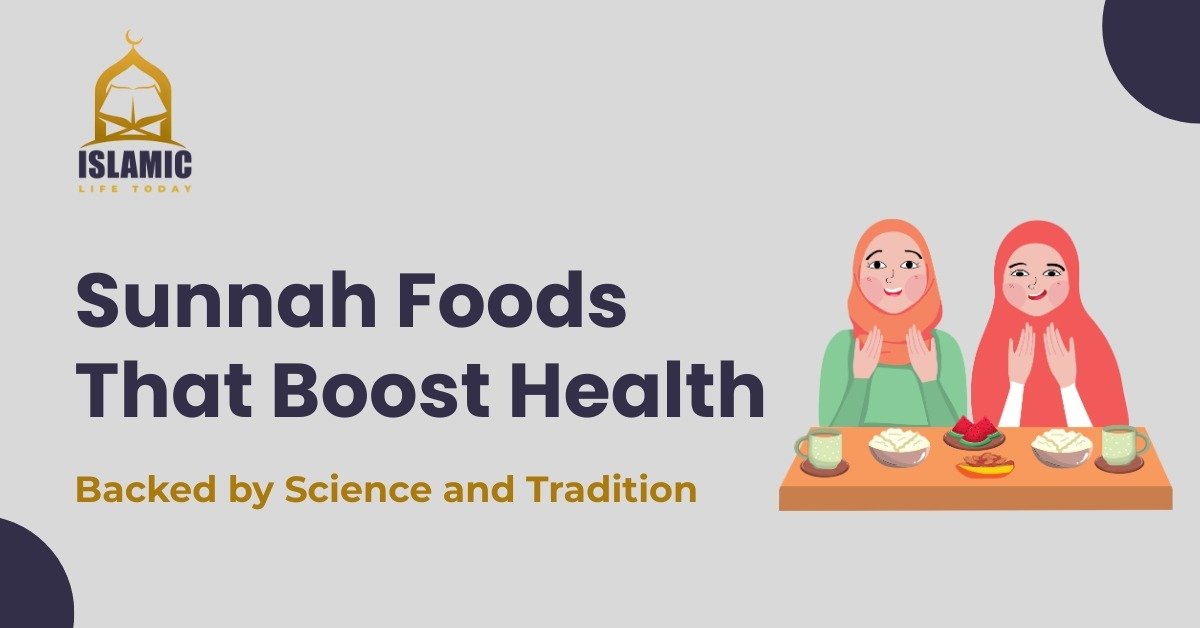
Sunnah foods for better health include dates, honey, black seed (kalonji), olive oil, milk, barley, vinegar, and pomegranate—foods the Prophet Muhammad ﷺ ate, recommended, or praised in the Quran and Hadith. Modern research links each of these to real, measurable benefits: better digestion, stronger immunity, balanced blood sugar, and lower inflammation. Eating them isn’t just spiritually rewarding—it’s a nutrition strategy that science is only now catching up to.
Introduction
Long before nutritionists started talking about gut microbiomes, antioxidants, or anti-inflammatory diets, the Prophet Muhammad ﷺ was already pointing his companions toward foods that did all of this—dates to break a fast, honey for healing, black seed as a remedy for “every disease except death,” and olive oil from a tree the Quran itself calls blessed.
What’s remarkable isn’t just that these foods were recommended fourteen centuries ago. It’s that modern clinical research keeps confirming why. This guide walks through the most well-documented sunnah foods, what the science actually says about each one, and how to bring them into your daily routine in a practical, sustainable way—not as a “diet,” but as a way of eating that nourishes both body and soul.
Why Sunnah Foods Matter for Health Today
Most of today’s health problems—fatigue, poor digestion, blood sugar spikes, chronic inflammation—are linked to processed foods, irregular eating, and overconsumption. The Sunnah approach to eating addresses all three, not through restriction, but through a simple framework: eat foods that are tayyib (pure, wholesome), eat in moderation, and eat with intention.
The Prophet ﷺ taught Muslims to fill one-third of the stomach with food, one-third with water, and leave one-third empty. Modern dietitians widely recognize this principle of moderation as a foundation for good metabolic health.
Now let’s look at the specific foods.
1. Dates (Tamar) — Nature’s Energy Source
Dates were a daily staple in the Prophet’s ﷺ diet and remain central to breaking the fast in Ramadan.
What the Sunnah says: The Prophet ﷺ recommended starting the fast-breaking meal with dates, often with water or milk.
What science says: Dates are rich in natural sugars (glucose, fructose, sucrose) combined with fiber, which provides sustained energy rather than a sharp blood sugar spike. They’re also a strong source of potassium, magnesium, and antioxidants. Research has linked regular date consumption to improved digestive regularity, better gut microbiome diversity, and reduced fatigue due to their iron content.
How to use it: Eat 2–3 dates to break your fast, or have them as a natural sweetener alternative to refined sugar in smoothies and oatmeal.
2. Honey — The Original Healing Food
Honey is mentioned directly in the Quran (Surah An-Nahl, 16:69) as containing healing for people, and the Prophet ﷺ used it both as food and medicine.
What science says: Honey has demonstrated antibacterial, antioxidant, and anti-inflammatory properties in numerous studies. It’s been shown to support wound healing, soothe sore throats, and help regulate blood sugar more gently than refined sugar when used as a substitute.
How to use it: Replace white sugar with raw honey in tea, yogurt, or on whole-grain toast—but in moderation, as it’s still a sugar source.
3. Black Seed (Kalonji / Nigella Sativa) — “A Cure for Every Disease”
The Prophet ﷺ said: “This black seed is a cure for every disease except death” (Bukhari & Muslim).
What science says: Black seed contains thymoquinone, a compound studied extensively for its antioxidant, anti-inflammatory, and antimicrobial effects. Research has explored its role in supporting immune function, managing blood pressure, and even showing antitumor activity in lab studies. While “cure for every disease” is a statement of faith rather than a literal medical claim, the breadth of confirmed benefits is striking for a single seed.
How to use it: A teaspoon of black seed oil, or sprinkle crushed seeds over bread, salads, or into honey.
4. Olive Oil — From a “Blessed Tree”
Allah describes the olive tree as blessed in the Quran (An-Nur 24:35), and the Prophet ﷺ said: “Eat olive oil and anoint yourselves with it, for it comes from a blessed tree” (Tirmidhi).
What science says: Olive oil is the cornerstone of the Mediterranean diet, one of the most researched diets in the world. Harvard’s School of Public Health and numerous cardiovascular studies link extra virgin olive oil to reduced risk of heart disease, improved cholesterol profiles, and anti-inflammatory effects throughout the body.
How to use it: Use extra virgin olive oil as your primary cooking and salad oil instead of refined vegetable oils.
5. Milk — A Complete, Simple Nutrient Source
The Prophet ﷺ regularly drank milk and praised it as a complete food.
What science says: Milk provides calcium, protein, vitamin D (when fortified), and B12—nutrients essential for bone density, muscle maintenance, and nervous system health. For those who tolerate dairy well, it remains one of the most nutrient-dense whole foods available.
How to use it: A glass of milk with dates makes a traditional and nutritionally balanced light meal or suhoor option.
6. Barley (Sha’ir) — The Original Whole Grain
Barley was a staple grain in the Prophet’s ﷺ household, often used in soups and porridge (talbina).
What science says: Barley is high in beta-glucan fiber, which has been shown to lower LDL cholesterol, improve blood sugar control, and support gut bacteria diversity. Talbina specifically has been studied for its calming effects, with some research suggesting it may help reduce symptoms of mild depression.
How to use it: Try talbina (barley porridge with milk and honey) as an evening meal, especially during times of stress or illness.
7. Vinegar (Sirka) — An Underrated Sunnah Remedy
The Prophet ﷺ praised vinegar as a good condiment.
What science says: Studies on vinegar—particularly apple cider vinegar—show antibacterial properties and a potential role in moderating post-meal blood sugar spikes when consumed before meals. It’s also been researched for antioxidant and anti-obesity effects.
How to use it: A small amount of diluted apple cider vinegar before meals, or use as a salad dressing base.
8. Pomegranate — A Quranic Fruit
The Quran mentions pomegranates multiple times and describes them as a blessed fruit found in both this world and Paradise.
What science says: Pomegranates provide exceptionally high levels of polyphenol antioxidants that help reduce inflammation, support heart health, and may improve joint health.
How to use it: Eat fresh pomegranate seeds as a snack or add them to salads and yogurt.
How to Start Eating the Sunnah Way (Practical Steps)
You don’t need to overhaul your diet overnight. Start with these small, sustainable shifts:
- Begin meals with the intention — say Bismillah, and eat with gratitude.
- Replace one processed snack per day with dates, honey on toast, or a handful of nuts.
- Cook with olive oil instead of refined vegetable oils.
- Add black seed to your morning routine—oil, seeds, or honey blend.
- Practice portion moderation — the one-third rule (food, water, empty space) is a simple, science-aligned guideline.
- Don’t skip suhoor — even a light meal of dates and milk during fasting days supports sustained energy.
Frequently Asked Questions (FAQs)
Many sunnah foods—honey, dates, olive oil, black seed, and barley—have substantial scientific research supporting their health benefits, particularly for digestion, immunity, inflammation, and heart health.
Dates and honey are often considered the most foundational, given their frequent mention in Hadith and their well-documented nutritional profiles. However, olive oil has perhaps the strongest body of cardiovascular research behind it.
Yes. Anyone can benefit from these foods because nutritional science supports their health benefits. People who choose whole, minimally processed foods can especially benefit from including them in their diet.
There’s no fixed number prescribed, but odd numbers (like 3, 5, or 7) are mentioned in some traditions. Nutritionally, 3–5 dates per day is a reasonable amount for most people.
No. While the Prophet ﷺ ate meat, it wasn’t a daily staple in his diet. Moderation and variety—including grains, dates, and dairy—were more characteristic of his eating habits.
Final Thoughts
Sunnah foods offer something rare: a way of eating that nourishes the body while also connecting you to your faith. Modern science continues to validate teachings from over 1,400 years ago, reminding us that this guidance benefits both our spiritual and physical well-being. It was practical, timeless wisdom for living well.
Start small. Add a date here, a spoon of honey there, swap your cooking oil—and let these changes build into a lifestyle that benefits both this world and the next.