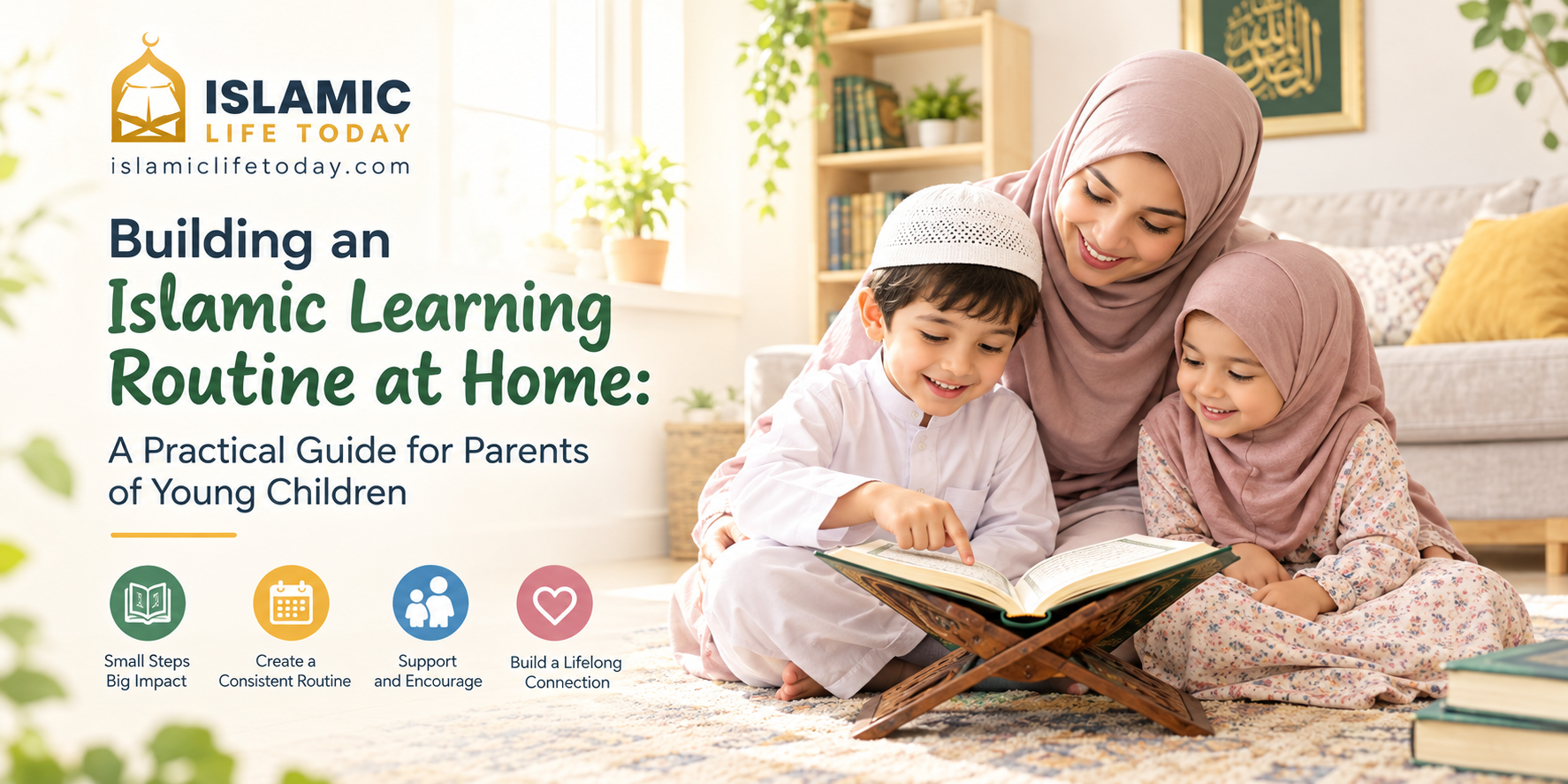
Most parents agree that their children should grow up knowing the Quran and the basics of their faith. Fewer have a clear picture of what that looks like week to week. Should a five-year-old start with Quran reading or with stories? How long should a session last? What do you do when a child suddenly refuses to practice? This guide sets out a practical routine for Islamic learning at home, built around what children can realistically absorb at each age.
What Children Can Handle at Different Ages
Expectations that ignore age are the most common reason routines fail. A rough guide, which varies from child to child, looks like this:
- Ages four to six: very short sessions of ten to fifteen minutes. Stories, songs, short duas and simple ideas about belief and kindness work best. Formal reading usually starts with letters and sounds.
- Ages seven to nine: sessions of twenty to thirty minutes. Children can learn to read Arabic with vowels, learn the steps of prayer and begin simple habits such as daily adhkar.
- Ages ten to twelve: sessions of thirty to forty minutes. They can handle more structure, set goals and begin to ask deeper questions about why Muslims do what they do.
- Teenagers: they need respect for their questions and a sense of ownership over their learning, with less supervision and more conversation.
Matching the activity to the age keeps the experience positive. A child who finishes each session feeling capable will come back the next day.
Setting Up the Home Environment
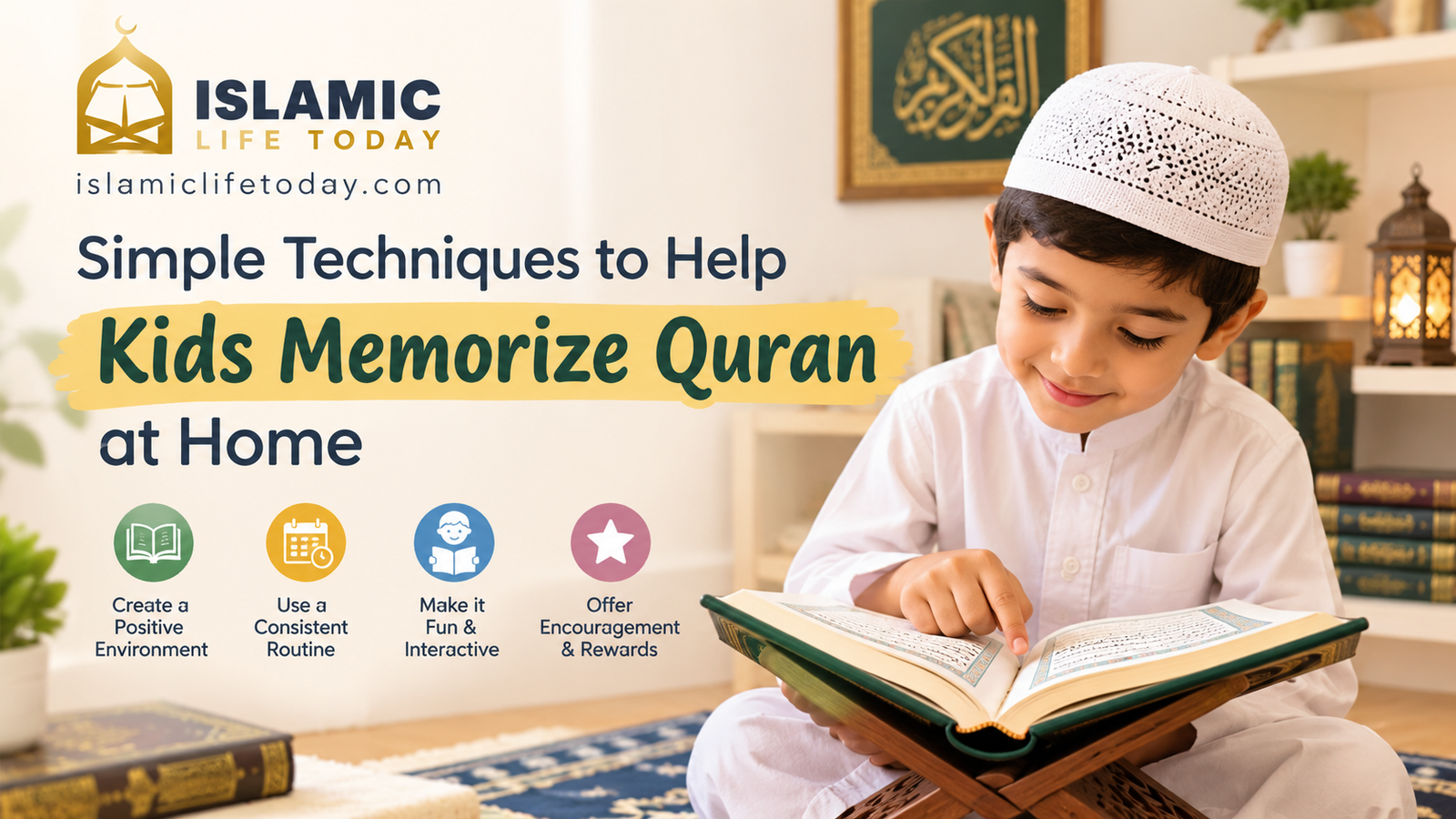
A routine is easier to keep when the environment makes it easy. Choose one consistent place for Islamic learning, ideally quiet and free of screens. Keep the materials within reach: a Quran or reading book, a notebook and a small prayer mat if prayer practice is part of the session. When the place and time stay the same, the child learns to switch into learning mode without a struggle.
Timing matters as much as place. Many families find that the best slots are right after Fajr on weekends, after school once the child has had a snack and a short break, or after Maghrib when the household is calm. Avoid the hour when the child is tired or hungry, since even the best lesson struggles then.
Where Islamic Learning Happens Today
Families have more options than in the past. Children learn at home with their parents, at weekend schools, in mosque classes and, increasingly, through video lessons from an online islamic academy. Each setting has strengths. Home learning builds habits and family bonds, mosque classes offer community, and live online lessons offer flexibility and access to teachers who may not live nearby. Many families combine two or three, and the combination matters less than whether the child is learning steadily and happily.
Whatever mix you choose, keep one person responsible for the whole picture. Usually that is a parent, who knows what the child has learned, what is coming next and how the child is feeling about it.
Starting Quran Reading With Young Children
Reading the Quran starts with the Arabic letters, their sounds and the short vowels. This stage may look slow, but it determines how smoothly everything else goes. Rushing into verses before the foundation is solid leads to guessing and repeated errors that are harder to fix later.
Children can learn this foundation at home, in a mosque or through online quran classes for kids, and in every setting the same features separate a good lesson from a poor one: a teacher who listens to the child recite, corrects mistakes on the spot, keeps the lesson short and varies the activity. Look for this in practice rather than in descriptions. Sit in on a lesson if you can and notice whether your child is engaged, whether mistakes are corrected kindly and whether the child leaves knowing something new.
At home, ten minutes of daily review does more than long weekend sessions. Read the new letters or lines aloud together, let the child lead when they feel confident and end on something they can do well.
Teaching the Basics of Faith Alongside Reading
Quran reading is one part of Islamic education. Children also need to understand what they believe and how Muslims live. A simple sequence works well:
- Belief: who Allah is, why we thank Him and what it means to trust Him, explained in simple language.
- Prayer: wudu first, then the movements of prayer, then the words, a little at a time.
- Character: honesty, kindness, patience and respect, taught through everyday examples at home and school.
- Stories: the prophets and the life of the Prophet Muhammad, peace be upon him, told in an age-appropriate way.
- Daily duas: short supplications connected to routines such as eating, sleeping and travelling.
Stories and questions tend to work better than lectures. When a child asks a difficult question, take it seriously. An honest “let us find out together” builds more trust than a rushed answer.
When a Child Needs More Personal Attention
In a group, a child can fall behind unnoticed. Some children are shy, some are quick but careless, and some need a slower pace than the class allows. For these children, one to one quran classes online with a teacher who focuses only on them can make a noticeable difference, because every mistake is heard and corrected and the pace follows the child rather than the group.
Personal attention is also useful at particular moments: when a child is preparing to move to a new stage, when they have missed lessons because of illness or travel, or when a specific problem, such as a confusing group of letters, keeps returning. Many families use one-to-one lessons for a few months to rebuild confidence, then return to a group.
Keeping a Weekly Routine Manageable
A routine should fit the family, not the other way around. A sample week for a primary-school child might be:
- Three short lessons a week with a teacher, lasting thirty minutes each.
- Ten minutes of review at home on school days, at a fixed time.
- One relaxed family session at the weekend: a story, a dua practice or listening to recitation together.
- One day of rest from structured learning.
If a week gets busy, reduce rather than cancel. A five-minute review keeps the habit alive and tells the child that the routine matters even when life is hectic.
What to Do When a Child Resists
Resistance is normal and usually temporary. Before reacting, ask what is behind it. Is the lesson too long? Is it too hard? Is the child tired or distracted by something else? Often a small adjustment solves it: shorter sessions, a different time of day, a small reward for consistency or a change in activity.
- Stay calm and avoid turning Quran time into a battle or a punishment.
- Praise effort specifically, such as “your pronunciation of that letter is much clearer.”
- Give limited choices, for example which of two surahs to review first.
- Talk to the teacher so you can adjust together.
- Avoid comparing the child with siblings or cousins.
Knowing When Your Child Is Progressing
Progress in children is easy to miss because it is gradual. Over a month or two, look for small signs: the child recognizes letters faster, hesitates less, remembers last week’s lesson, asks questions about what they have learned or starts practicing without being reminded. Keep a simple notebook where you or the child record what was covered, and look back at it after a few months. Seeing how much has changed is itself motivating.
Questions Parents Often Ask
Should I start with Quran reading or with the basics of faith? Both can start together. Short stories, duas and simple ideas can begin at four, while reading starts with letters and sounds. They support each other.
What if I cannot read Arabic myself? You can still support almost everything that matters: the routine, the encouragement, the listening, the communication with the teacher and the example you set in showing respect for the Quran. Many parents learn alongside their children and find it brings the family closer.
Is it too late to start at ten or twelve? No. Older children often learn faster because they understand explanations and can focus for longer. The first stage simply needs to be taken at their own pace, without comparison to younger children.
Final Thoughts
A good Islamic learning routine is simple, consistent and warm. Match the activity to your child’s age, create a regular place and time, build the foundation of reading and belief step by step, and respond to resistance with patience instead of pressure. Over time, those small daily habits turn into a lasting relationship with the Quran and with the faith itself.